Crafting Cosmic Covers with Voyager Ship Backgrounds
In the competitive world of self-publishing, particularly on platforms like Amazon KDP, your cover is your first and most critical handshake with a potential reader. It’s not just a picture; it’s a promise of the experience inside. For projects centered on space, exploration, or science fiction, finding the right visual foundation can be a challenge. This is where a dedicated set of assets like the Voyager Ship Backgrounds for Covers becomes an indispensable tool for creators. This collection is more than just a random assortment of space images; it's a curated toolkit designed to solve a specific design problem with efficiency and style.
Understanding the Visual Language of the Collection
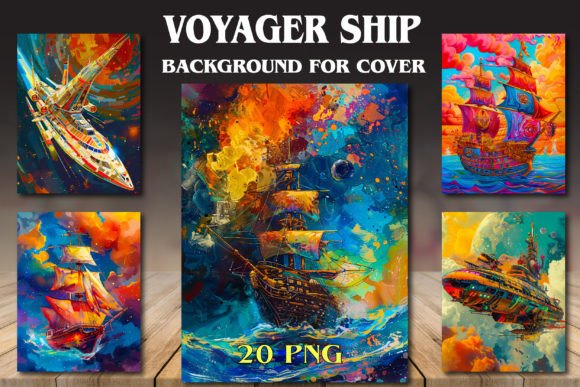
The 20 PNG files included in this bundle are AI-generated, which gives them a distinct aesthetic. They lean into a style that is both hyper-detailed and slightly fantastical. Think of deep-space nebulae rendered with impossible clarity, sleek voyager ships cutting through fields of stylized stars, and planetary vistas that feel both familiar and wonderfully alien. The personality of these backgrounds is one of grandeur, mystery, and forward momentum. They aren't just static backdrops; they suggest narrative. A cover featuring one of these images immediately communicates themes of journey, discovery, and the vast unknown.
This style sits at a fascinating crossroads. It has the clean, high-resolution polish of modern digital print assets, making it perfect for the crisp demands of e-commerce thumbnails and physical book printing. Yet, it also carries the emotive, slightly painterly quality of concept art, which can evoke a strong emotional response. For a designer or publisher, this means the backgrounds can serve as a powerful design asset that does much of the heavy lifting in setting the tone. You're not just getting a picture of a spaceship; you're getting a piece of visual storytelling that can anchor your entire cover design.
Strategic Applications Beyond the Coloring Book
While the product is marketed for KDP coloring book covers, its utility extends far beyond that single application. Understanding where these backgrounds work best allows you to maximize your investment and explore new creative avenues. Here’s a practical breakdown:
- Publishing & KDP: This is the core use case. For adult coloring books focused on mindfulness or stress relief, these cosmic scenes provide a complex, engaging canvas. For children's activity books or boys' and girls' coloring books, the voyager ship motif sparks imagination. The high-resolution (300 dpi) PNGs ensure your printed cover looks sharp and professional, a key factor in Amazon Kindle Direct Publishing success.
- Digital Products & Marketing: Think beyond the book. These images are perfect for creating social media graphics for authors, podcasters, or tech bloggers. They can serve as stunning backgrounds for website hero sections, email newsletter headers, or digital product mockups. Imagine using one as the backdrop for a digital paper pack or a printable wall art quote about exploration.
- Branding & Identity: For small businesses in the tech, education, or entertainment sectors, a subtle use of these backgrounds can inform a brand identity. A cropped section could become a unique website background, or the color palette could inspire a brand's visual language. The consistent theme across the 20 images offers a built-in system for creating visual hierarchy and recognition across different marketing materials.
- Personal & Commercial Projects: The licensing is key. For crafters and hobbyists, they are ideal for personal projects like scrapbooking, custom party invitations, or framed art. For entrepreneurs, they are ready-to-use commercial font—or rather, commercial image assets—for products you intend to sell, provided you review the license terms.
Integrating Assets for Professional Results
Having a great background is only half the battle. The real artistry lies in integration. A common mistake is to treat these as finished designs. Instead, view them as the foundational layer upon which you build your typography and layout. Here’s how to approach it for a polished, professional outcome:
First, consider readability and visual hierarchy. The intricate, detailed nature of these backgrounds is their strength, but it can also compete with text. Your title and author name need to pop. This is where thoughtful font pairing comes in. A bold, clean sans serif font often works best for the main title, offering high contrast against the complex imagery. You might pair it with a more elegant serif font for the subtitle or author name. Avoid overly ornate script fonts or handwritten fonts unless they are exceptionally bold, as they can get lost in the cosmic detail. Always test your text placement by viewing the cover as a small thumbnail—this mimics how it will appear in an online store.
Second, leverage the collection for consistency and professionalism. If you're creating a series of books, using different backgrounds from the same set instantly creates a cohesive look. This builds brand recognition for your publishing imprint. The consistent quality and style across the 20 files act as a built-in style guide, helping you maintain a professional standard across multiple projects, which is a hallmark of strong editorial design and packaging design principles.
Finally, evaluate fit with your specific project. Not every space image will suit every book. A background featuring a lone, contemplative voyager ship drifting past a nebula might be perfect for a mindfulness coloring book. A more dynamic image with a fleet of ships engaging in an interstellar journey could be ideal for an adventure-themed activity book for boys. Take the time to match the mood of the background to the core promise of your content. This thoughtful curation is what separates a generic cover from one that truly engages your target audience.
In essence, the Voyager Ship Backgrounds for Covers offer a practical, high-quality solution for a common design need. They provide the visual firepower to capture attention, while their versatility allows them to serve as a cornerstone for a wide range of creative and commercial projects. By focusing on strategic integration rather than just using them as-is, you can transform these assets into powerful tools for storytelling, branding, and audience connection.